Understanding Disordered Eating: Causes, Impacts, and Ways to Support Yourself
Food is meant to nourish us, connect us, and give us energy for daily life. Yet for many people, eating becomes tangled with guilt, rules, worry, control, secrecy, or shame. That can be exhausting, especially when the outside world often praises behaviours that may be harmful under the surface.
Disordered eating sits in that complicated space. It may not meet the criteria for a diagnosed eating disorder, but it can still affect health, mood, relationships, and self-worth. It deserves care, not dismissal.
This article is for information only and is not a substitute for medical or mental health advice. If eating, weight, exercise, or body image worries are affecting daily life, support from a GP, therapist, dietitian, or eating disorder service can make a real difference.
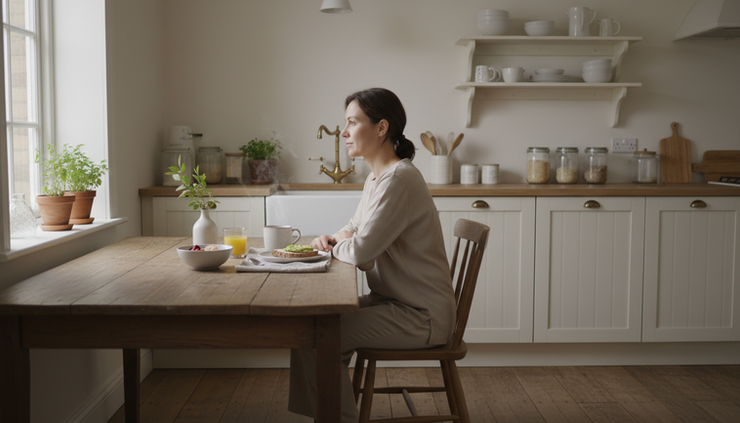
What disordered eating means
Disordered eating describes a pattern of thoughts and behaviours around food, eating, weight, body shape, or exercise that causes distress or disruption. It can look different from person to person.
Some people restrict food for long periods. Some eat in a chaotic way, swinging between rigid control and feeling out of control. Others feel anxious about eating in public, avoid whole food groups without a medical reason, exercise to “make up for” eating, or feel intense guilt after meals.
Common signs can include:
Skipping meals or eating very little, even when hungry
Labelling foods as “good” or “bad” in a rigid way
Feeling guilty, ashamed, or panicked after eating
Bingeing, or feeling unable to stop eating
Using fasting, vomiting, laxatives, or excessive exercise to compensate
Avoiding social events because food is involved
Weighing often or checking the body repeatedly
Feeling that self-worth depends on weight, shape, or food choices
Hiding eating habits from other people
Disordered eating can affect people of any age, gender, body size, background, or health status. Someone may appear “healthy” on the outside and still be struggling. Someone may receive praise for weight loss, discipline, or fitness while privately feeling frightened and trapped.
It also exists on a spectrum. At one end, there may be occasional food guilt or dieting thoughts. Further along, food and body concerns may take up more time, narrow life choices, and create physical or emotional harm.
The level of distress matters. If eating rules, body checking, or fear of food are taking up mental space or stopping a person from living freely, that is enough reason to seek support.
Where disordered eating can come from
There is rarely one single cause. Disordered eating often develops from a mix of personal, social, emotional, biological, and cultural factors. It may begin as an attempt to feel safer, calmer, more accepted, or more in control.
Diet culture and body pressure
Many people grow up surrounded by messages that thinness equals success, health, attractiveness, or discipline. Food is often moralised too. People talk about being “good” for eating a salad or “bad” for eating cake.
These messages can make normal eating feel loaded. Instead of asking, “Am I hungry?” or “What would satisfy me?”, a person may ask, “Will this ruin everything?” or “What does this say about me?”
In the UK and elsewhere, weight-focused comments can appear in families, schools, workplaces, sport, healthcare, and media. Even when comments are meant kindly, they can stick. Praise for weight loss can be especially powerful, because it may reward restrictive habits before anyone sees the harm.
Stress, control, and difficult emotions
Food and body control can become a way to cope. During stressful times, eating rules may offer a sense of order. For someone facing grief, anxiety, trauma, uncertainty, bullying, identity struggles, or major life changes, controlling food can feel like one clear thing to hold onto.
At first, the behaviour may seem to help. Restriction can numb feelings for a while. Bingeing can soothe or distract. Exercise can reduce anxiety in the short term. But over time, these patterns often create more distress, because the underlying feelings remain and the behaviour becomes harder to step away from.
Family, relationships, and early experiences
Families do not “cause” disordered eating in a simple way, but early experiences can shape how a person relates to food and their body.
A child may hear constant dieting talk. They may be encouraged to finish everything on the plate and lose touch with fullness. They may be teased about body size. They may see food used as reward, punishment, comfort, or control.
Relationship dynamics can also play a part. If someone feels unseen, criticised, unsafe, or under pressure to be perfect, body and food control may become a private language for distress.
Personality, temperament, and biology
Some traits can make a person more vulnerable. Perfectionism, high sensitivity, anxiety, people-pleasing, and a strong need for control can all contribute. That does not mean these traits are bad. Many are strengths in the right setting. The problem comes when they turn inward and become harsh rules.
Biology matters too. Hunger, fullness, mood, sleep, and stress hormones all interact. Restricting food can affect brain function and make food thoughts stronger. A person may then blame themselves for being “obsessed”, when the body is actually responding to undernourishment or irregular eating.

How disordered eating affects daily life
Disordered eating is not only about food. It can reach into almost every part of life.
It affects the body
The physical effects vary depending on the behaviours involved, but they can be serious. Restricting food, purging, bingeing, or over-exercising may affect digestion, energy, sleep, hormones, concentration, heart health, bone health, and the immune system.
Even when blood tests look “normal”, a person may still feel unwell. They may feel dizzy, cold, tired, bloated, constipated, weak, or preoccupied with food. Irregular eating can also make hunger and fullness cues harder to read, which can make the cycle feel even more confusing.
Recovery often involves rebuilding trust with the body. That can take time.
It affects the mind
Food rules can become mentally loud. A person may spend much of the day planning meals, counting, comparing, checking, avoiding, or replaying what they ate.
This can increase anxiety and low mood. It can also make decisions feel harder. If breakfast already feels like a test, a normal day can become draining before it has properly started.
Shame is common too. Many people believe they “should know better” or “just stop”. But disordered eating is not a lack of willpower. It is a pattern that often served a purpose at some point, even if it now causes harm.
It affects relationships
Food is part of birthdays, holidays, family meals, dates, religious celebrations, work breaks, and evenings with friends. When eating feels unsafe, social life can shrink.
A person might cancel plans, avoid restaurants, cook separately, hide food, or become irritable around mealtimes. Loved ones may feel confused, worried, or shut out. The person struggling may feel guilty for causing concern, while also feeling unable to explain what is happening.
Supportive relationships can help, but only when they move away from blame and body comments. The most helpful approach is usually calm, steady, and compassionate.
It affects identity and self-worth
Over time, disordered eating can make life smaller. Achievements, relationships, creativity, rest, pleasure, and curiosity may be pushed aside by the need to follow rules.
A person may start to believe they are only acceptable when eating a certain way or looking a certain way. That belief is painful, and it is also changeable. Self-worth can be rebuilt around values, connection, care, and the full reality of being human.
What can help you support yourself
Support does not have to begin with a huge dramatic step. Small, steady actions can interrupt the cycle and make more help feel possible.
Start by naming what is happening
Many people minimise their struggle because they do not feel “ill enough”. That belief can delay support for years.
Try using clear, non-judgemental language:
“I feel anxious when plans involve food.”
“I have rules that are hard to break.”
“I feel guilty after eating.”
“I am using exercise to cope with eating.”
“Food thoughts are taking up too much of my day.”
Naming the pattern does not mean labelling yourself forever. It simply gives you a starting point.
Move from rules to curiosity
Rigid rules tend to increase fear. Curiosity creates space.
Instead of asking, “Was this good or bad?”, try asking:
“What was I feeling before I ate?”
“Was I hungry, tired, stressed, lonely, or overwhelmed?”
“Did this meal give me enough energy?”
“What would feel kind to my body now?”
“What rule am I following, and where did it come from?”
This is not about judging the answers. It is about learning the pattern.
Build regular nourishment
For many people, regular eating is a key part of healing. Long gaps without food can increase anxiety, cravings, binge urges, irritability, and obsession with food.
A simple structure may help, such as meals and snacks spaced through the day. This does not need to be perfect. The aim is to give the body more trust and predictability.
If this feels frightening or physically difficult, professional support is especially helpful. A registered dietitian with eating disorder experience can help make changes safely.

Reconsider your relationship with movement
Movement can support mood, strength, sleep, and wellbeing. It can also become compulsive or punitive.
It may help to ask:
“Would I still do this if my body shape did not change?”
“Can I rest without feeling guilty?”
“Am I exercising through pain, illness, or exhaustion?”
“Does movement make my life bigger or smaller?”
For some people, taking a break from certain forms of exercise is part of recovery. For others, gentle, enjoyable movement can remain supportive. The key is honesty and safety.
Reduce body checking where possible
Body checking can include weighing, mirror checking, pinching skin, comparing photos, measuring, or trying on clothes to test body size. It often promises reassurance, but usually feeds anxiety.
Reducing it gradually can help. For example, you might move scales out of sight, limit mirror checking, wear clothes that fit comfortably, or avoid re-taking photos to inspect your body.
This can feel uncomfortable at first. That discomfort does not mean you are doing something wrong. It often means the brain is learning that safety does not have to come from checking.
Make your environment more supportive
No one heals in a vacuum. The messages around you matter.
You might choose to:
Mute accounts that promote dieting, body comparison, or extreme fitness
Follow people who show body diversity and balanced eating
Ask friends or family not to comment on weight or food
Keep enough food at home to avoid restriction-driven chaos
Plan for difficult moments, such as meals out or changing rooms
A supportive environment cannot remove every trigger, but it can lower the volume.
Talk to someone safe
Disordered eating thrives in secrecy. Speaking to one safe person can reduce shame.
Choose someone who can listen without trying to fix everything at once. You might say:
“I am finding food and body image harder than I have let on. I do not need you to solve it today, but I would like support.”
If talking feels too hard, writing a message can be easier. A GP can also be a first step, especially if there are physical symptoms, rapid weight change, purging, fainting, missed periods, chest pain, or severe distress.
In the UK, eating disorder charities and NHS services can offer guidance. Waiting lists can be difficult, so reaching out early matters.
When to seek professional help
You do not need to wait until things are severe. Professional help is appropriate if food, weight, exercise, or body image concerns are affecting health, mood, relationships, work, study, or daily routines.
Seek urgent medical advice if there is fainting, chest pain, vomiting blood, severe weakness, confusion, self-harm risk, or other worrying physical symptoms.
Helpful support may include:
Type of support | How it can help |
GP | Checks physical health and can refer to specialist services |
Therapist or counsellor | Helps with emotions, beliefs, anxiety, trauma, and behaviour patterns |
Eating disorder specialist | Offers focused treatment for food, body image, and related distress |
Registered dietitian | Supports safe, adequate, and less fearful eating |
Trusted support person | Provides steady care, encouragement, and practical help |
Recovery is not usually a straight line. There may be steps forward, setbacks, and moments of doubt. That does not mean support is failing. It means this is a real process, and it deserves patience.

A kinder way forward
Disordered eating often begins as a way to cope, belong, feel safe, or gain control. Over time, it can become a source of fear and restriction. Understanding this helps shift the question from “What is wrong with me?” to “What has this been trying to help me manage?”
That shift matters. Shame keeps people stuck. Compassion makes change more possible.
A helpful first step might be very small: eat breakfast a little more regularly, tell one trusted person, book a GP appointment, put away the scales, or notice one food rule without obeying it automatically.
You do not have to feel ready for everything. You only need one next act of care. Then another. Over time, those acts can help food become less frightening, the body less like an enemy, and life wider again.


Comments